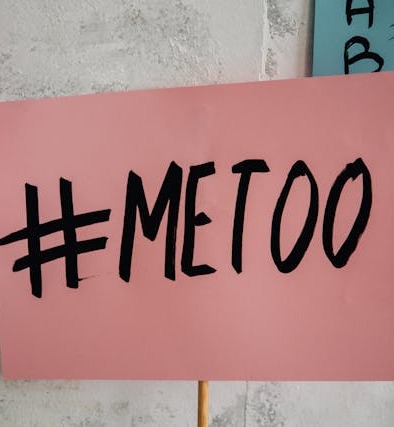
If you have experienced sexual harassment or retaliation in Buffalo, our employment attorney can help you file a claim and hold your employer accountable.
The New York State Human Rights Law reaches every employer in the state, including a business with one employee, and it protects Buffalo workers under a far lower standard than federal law does. Since 2019, harassment no longer has to be severe or pervasive to be illegal here.
That distinction decides cases. Conduct that a federal court would dismiss can support a claim under state law.
Megan Thomas Law represents employees only. We do not represent employers.
We handle sexual harassment and workplace retaliation claims for employees throughout Erie County and Western New York, including people still on the job, people who were forced out, and people who left a year ago and are only now deciding what to do.
Megan Thomas experienced sexual harassment and sex discrimination at work herself. That is why this firm exists. She also brings an extensive litigation background, and she is willing to try a case rather than push a client toward a weak settlement.
If you are unsure whether what happened to you was illegal, that uncertainty is worth one phone call.
Two laws carry most Buffalo claims, and they do not set the same bar.
New York State Human Rights Law. Applies to every employer in New York, with no minimum number of employees. Harassment is unlawful when it subjects you to inferior terms, conditions, or privileges of employment because of your sex, gender identity, gender expression, or sexual orientation. Your employer’s only real defense is proving the conduct amounted to a petty slight or a trivial inconvenience.
Title VII of the Civil Rights Act. Applies to employers with at least fifteen employees, and still requires harassment to be severe or pervasive. Many Western New York employers fall below that threshold, which is one reason state law does the heavy lifting in this region.
Retaliation. It is illegal for an employer to punish you for reporting harassment, or for backing up a coworker who did. A retaliation claim is separate from a harassment claim, and it sometimes proves easier to win than the underlying harassment claim.
State law protects full-time and part-time employees, paid and unpaid interns, independent contractors, freelancers, job applicants, and people working remotely from within New York.
Harassment occurs in every industry. Certain conditions in the Buffalo economy make it more likely, and harder to report.
Healthcare and long-term care employ a large share of the regional workforce, and overnight shifts with one on-site supervisor reduce potential witnesses, making a claim easier to prove.
Warehousing, logistics, and cross-border trade industries also operate around the clock. Manufacturing and the skilled trades are often composed of male-dominated crews where a woman is often the only one on a shift.
Hospitality and food service across downtown, Elmwood Village, Allentown, and the waterfront run on tipped income, which gives a manager scheduling leverage.
Higher education and research add the problem of a supervisor controlling a student’s funding.
Small and family-run operations are common across all of these, but that changes nothing legally.
Erie County falls within the New York State Division of Human Rights Western Region, which runs offices in Buffalo and Rochester. For EEOC complaints, Buffalo employees can file with the Buffalo Local Office.
Deadlines matter here, and they are not the same across the two routes. You generally have three years to file a sexual harassment complaint with the Division. Discrimination claims on other grounds also carry three years, for conduct occurring on or after February 15, 2024. A federal charge with the EEOC must be filed within 300 days of the last incident. Under state law, you can also file a lawsuit in state court without going to an agency at all.
Keeping deadlines in mind, please speak with an attorney before you file anything with either agency. We have seen people file on their own, and permanently limit what they could recover. A first conversation costs nothing and can set you up for success.
A successful claim can include lost wages and benefits, front pay where returning to the job is not realistic, and damages for emotional distress. New York has permitted punitive damages in harassment cases since 2019. Attorney fees and costs are often recoverable, so the cost of pursuing a claim does not land on you.
Money is usually not the sole recovery. Many cases resolve with terms that shape what comes next, including a neutral or positive reference, a non-disparagement agreement binding both sides, and a clean record going into your next job.
Write it down now. Record dates, times, the exact words used, and who else was present. Notes made at the time carry weight that a later recollection does not.
Keep copies on a personal device. Screenshot messages from your own phone. Do not forward work documents to a personal email account, because that can give your employer a legitimate misconduct issue to raise against you.
Put your complaint in writing, if it is safe to do so. An email creates proof that your employer was on notice. If the person harassing you owns the business, or if you have reason to believe reporting will make things worse, speak with an attorney first.
Track what changes afterward. A sudden poor review, a schedule cut, a new performance plan, or being left out of meetings after you complain can each support a retaliation claim.
Call before you resign. Quitting does not end your rights, but leaving without preparation makes certain claims harder to prove later.
Nobody should have to choose between keeping a job and being safe at it. If something happened at work in Buffalo and you are weighing what to do next, we offer a free confidential consultation for qualifying cases.
The conversation stays between us, and making the call commits you to nothing.
Amherst, Cheektowaga, Tonawanda, West Seneca, Lancaster, Orchard Park, Hamburg, Williamsville, Kenmore, Depew, Grand Island, and communities throughout Erie County, Niagara County, and Western New York.
My employer has fewer than fifteen employees. Am I still protected?
Yes. Title VII has a fifteen-employee threshold, but the New York State Human Rights Law applies to every employer in the state regardless of size.
Is a single incident enough in New York?
It can be. State law removed the severe or pervasive requirement in 2019, so one incident may support a claim if it rises above a petty slight.
How long do I have to act?
Generally, three years for a Division complaint or lawsuit filed in New York state court, and 300 days for an EEOC charge. Both windows are shorter than they sound once evidence starts disappearing, so it is worth calling early.
The information provided on this page is for general informational purposes only, and is not intended as legal advice. Viewing this page or contacting the firm does not create an attorney-client relationship.

"*" indicates required fields


You’ve dealt with enough.
The harassment, the excuses, the retaliation — it all ends now.
Start your claim. Get what you’re owed.